
Most people know that exercise is good for them. That’s not the problem. The problem is that knowing something and doing it consistently are two very different things, and for a lot of the clients we work with, consistency is exactly where things fall apart.
It’s not laziness. It’s not lack of motivation. It’s usually that life gets in the way. A cold snap, a flare-up, a busy week, and the routine that was just starting to stick disappears. Getting it back feels harder than it did the first time. So it gets put off. And then put off again.
This is the part of movement that doesn’t get talked about enough. Not the what or the why, but the how of actually keeping it going.
Why consistency matters more than intensity
There’s a tendency to think about exercise in terms of effort. How hard you worked, how long you went, how many steps you hit. But for most people, especially those managing chronic conditions, recovering from injury or dealing with the physical effects of ageing, intensity is much less important than regularity.
The body adapts to what it does repeatedly. Muscles get stronger with consistent use. Balance improves with regular practice. Cardiovascular health responds to sustained activity over time. These adaptations don’t happen after one good session. They accumulate, slowly and reliably, when movement becomes part of the routine rather than something that happens when everything else lines up.
The research backs this up too. Moderate, regular exercise produces better long term outcomes than sporadic intense effort. A thirty minute walk most days does more for someone’s health over a year than occasional bursts of high effort with long gaps in between.
What gets in the way
For the people we see at LeapCare, the barriers to consistency are usually practical rather than motivational. Pain that makes movement feel risky. Fatigue that makes starting feel impossible. Uncertainty about what’s safe. A home environment that doesn’t naturally support activity. Sometimes just not knowing where to begin after a long stretch of doing very little.
These are real barriers and they don’t respond well to generic advice. Telling someone to just move more, without addressing what’s actually stopping them, rarely works. If anything it makes people feel worse about themselves when they can’t follow through.
The role of structured support
This is where physiotherapy and exercise physiology make a practical difference. Not just in designing a program, but in building one that accounts for what’s actually happening in someone’s life and body, and then being there consistently to support it.
When someone has a regular appointment, a clear plan and a clinician who understands their situation, the likelihood of sustained movement increases significantly. Accountability matters. So does having someone who can adjust the plan when things change, because they always do.
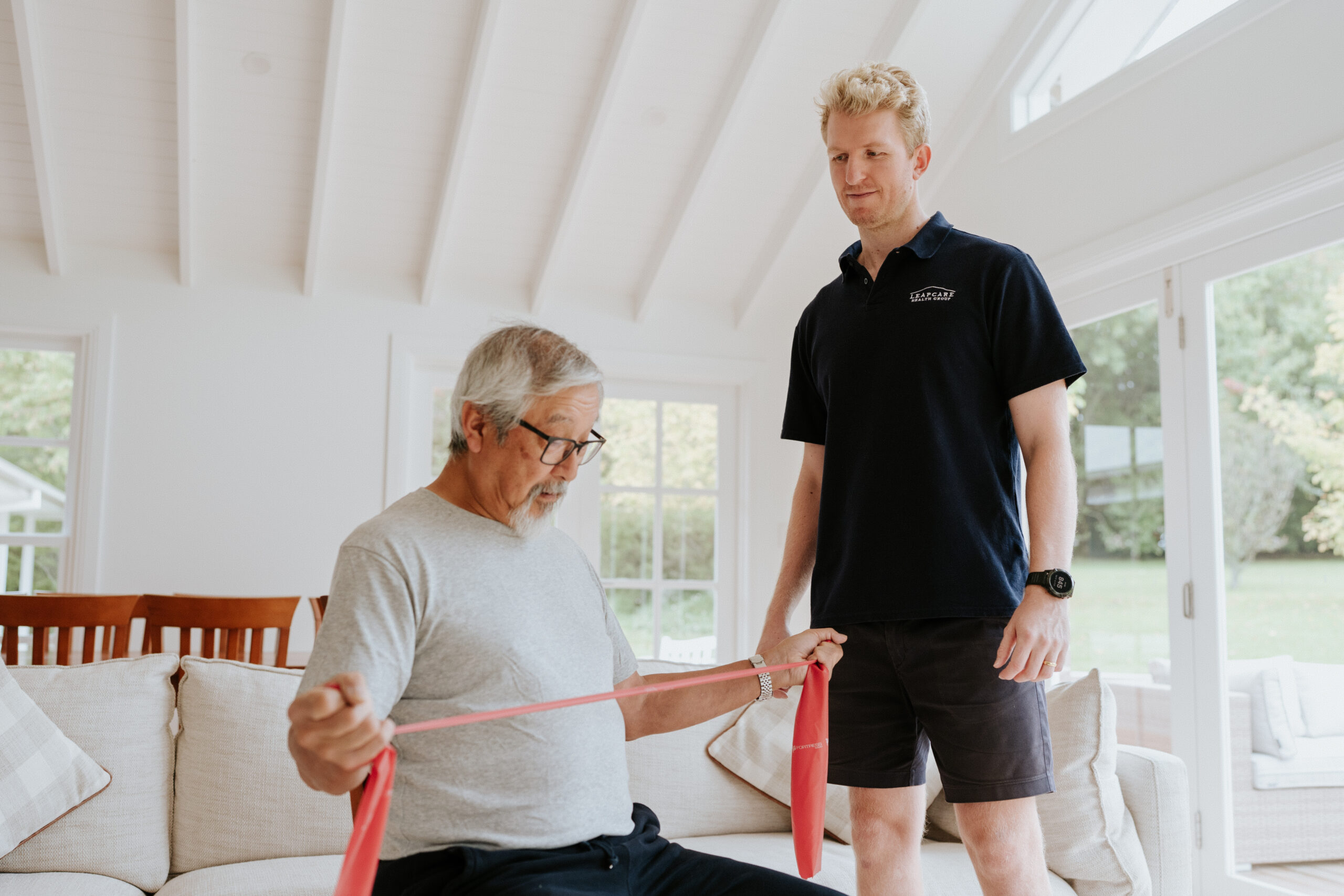
In-home care adds another layer to this. When the physio or exercise physiologist comes to you, the friction of getting there disappears. The program lives in the environment where someone’s daily life actually happens, which makes it far easier to embed movement into routine rather than treating it as a separate event you have to get ready for.
Small, steady and supported
One of the things I remind clients, and their families and carers, is that small consistent movement beats occasional big effort every time. Ten minutes of gentle exercise every morning is worth more than an hour once a fortnight. The goal isn’t perfection, it’s rhythm. Finding a level of movement someone can sustain, building on it gradually, and making it normal rather than exceptional.
At LeapCare we build programs around what’s realistic for each person, not what’s ideal in theory. We start where someone actually is, adjust when things change, and show up consistently, because that’s what we’re asking of our clients too. If you have someone who has struggled to maintain a movement routine, whether due to a chronic condition, recent injury or a long winter, it’s worth a conversation about what structured support could look like for them.
Consistency is a skill. With the right support, most people can build it.